Every skill you have ever learned, someone once taught you.
101 School is a free, volunteer-run school for young people. Every skill you learn here comes with a tree you plant.
Everyone starts at 101.
Nobody is born knowing how to write a CV, run a spreadsheet, speak in front of a room or grow a tree.
In most universities, “101” is the first course in a subject: the place where nobody is expected to know anything yet. It is also a promise. Everyone starts at 101, and everyone knows something that someone else is still at 101 in.
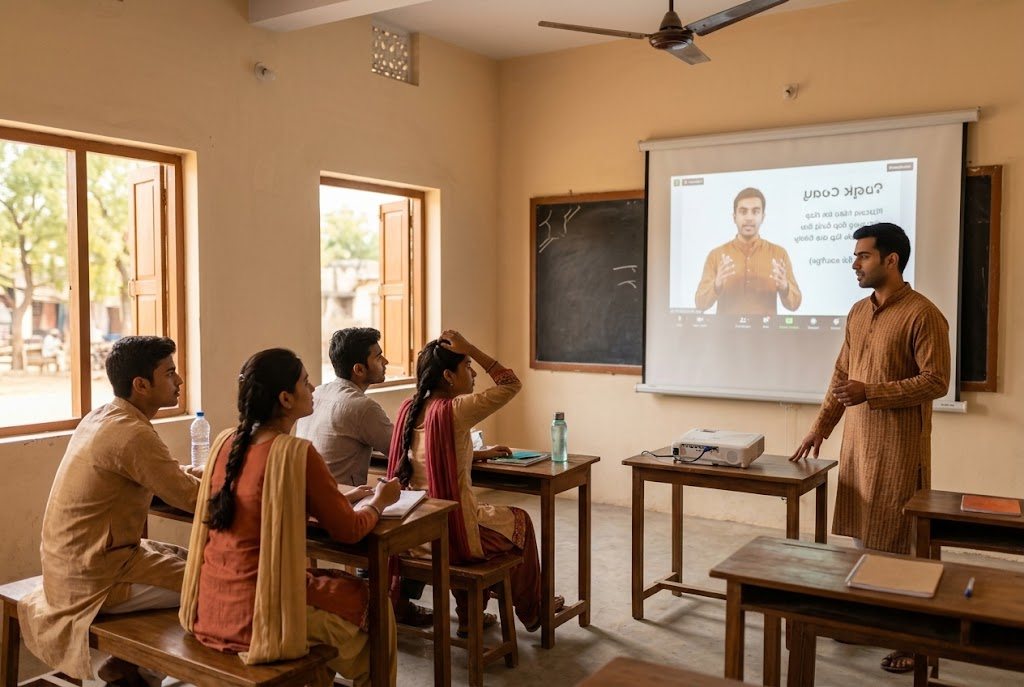
A student in Dhaka writing her first line of Python. A young shop owner in Nairobi learning spreadsheets. A graduate in Lima learning to speak in front of a room. They are all learners, and each of them could also teach. 101 School gives them a way to meet: free, live and in a language they understand.
- 1One person who wants to learn
- 0The community around them, and the Earth. In our logo, the zero is a globe.
- 1Another person, who already knows
Young people are ready to work. The skills are not reaching them.
The knowledge exists. What is often missing is a real person to learn from, a language you understand, and a reason to finish.
Jobs are changing faster than people are being trained
Jobs expected to be created and lost worldwide, 2025 to 2030
- Lost 92mCreated 170m
A net gain of 78 million jobs, for people with the right skills. 39% of today’s core skills are expected to change by 2030.
Most young people are online. Many others are not
Share of people using the internet, 2024
2.6 billion people were still offline in 2024. That is why we record every session and keep tests light on data.
Language is a barrier to learning
People without access to education in a language they speak or understand
40%
So we run national sessions in local languages, alongside global sessions in English.
A different kind of school, built on three simple ideas.
A real person
Every session is live, taught by a volunteer who uses the skill at work. Mentors shape it around their learners: one hour, a three-hour workshop, or an hour a day for a week.
Your own language
Global sessions run in English for the whole world. National sessions run in local languages, so nobody is left out because of the language they speak.
A certificate that means more
After the session you take a short test. Pass it, plant a tree, and earn a free certificate that shows you learned a skill and gave something back.
Behind every certificate, a tree.
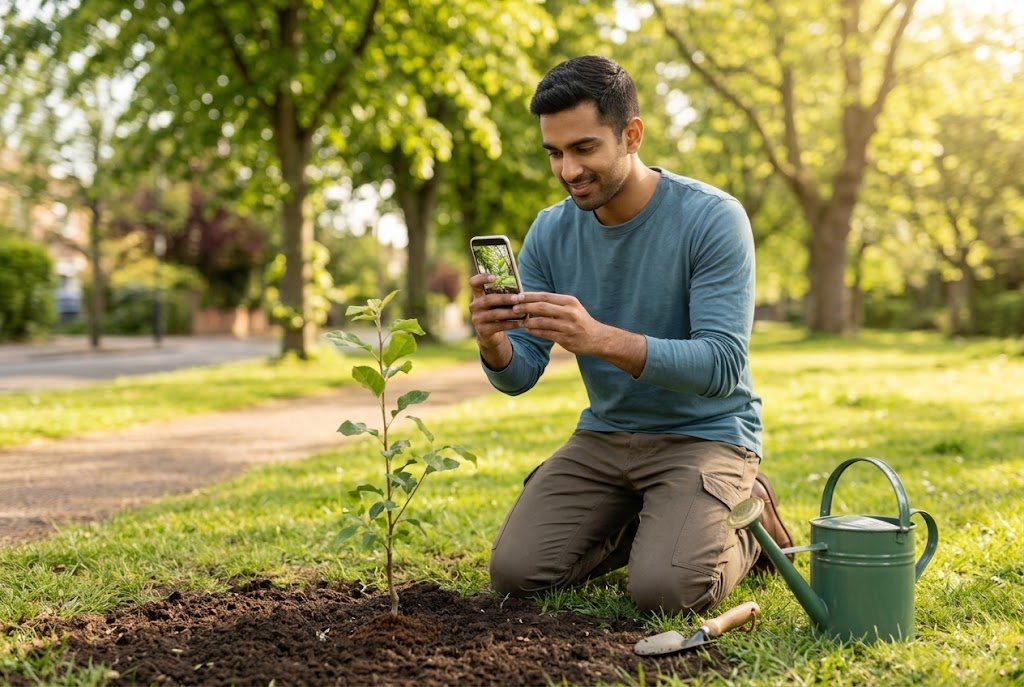
We asked a simple question: what if finishing a lesson also gave something back to the Earth? So before your certificate is issued, you plant a useful tree near you and share a geo-tagged photo of it.
Trees do real work close to home. A study of 93 European cities estimated that 30% tree cover could have prevented 2,644 premature deaths in a single summer by cooling the streets (Iungman et al., The Lancet, 2023).
Pledges are easy. Trees in the ground are what count. Trees left alone after planting often die (Holl and Brancalion, Science, 2020), so we check every tree again at 6 and 12 months. Our volunteers lead by example: every Regional Team member plants 10 trees and every Country Ambassador plants 5 when they join.
We did not invent the pieces. We joined them together.
Trained volunteers can teach well
In India, researchers working with J-PAL found that Pratham’s trained volunteers, running short and focused learning camps, produced very large learning gains (Banerjee et al., NBER Working Paper 22746, 2016).
Teaching can happen online
The United Nations invites people to volunteer online, in roles that include teaching and training (UN Volunteers). 101 School gives that idea a clear structure, for young people everywhere.

Run by people who show up.
Nobody at 101 School is paid, and everyone is accountable. A small Global Team sets the standards. Regional Teams in twelve regions support the countries. In every country, a Country Ambassador finds out what young people need, recruits mentors and makes sure at least one session happens every month.
The reward is not money. It is a real seat in a global team: an official title, an @101school.org email, a verified record of your work and regular contact with peers around the world.
We are at 101 ourselves.
These are targets, not results. We will publish what we learn, including what does not work.
- 2027
Pilot in 20 countries
60 volunteer mentors, 40 live sessions a month and 1,000 trees planted and checked.
- By 2028
100 countries
An active chapter in 100 countries across 12 regions, each with at least one live session a month.
- After the pilot
New programmes
Shaped by what learners, mentors and partners tell us during the pilot.
Questions people ask.
Can’t find yours? Write to us.
Is it really free?
Yes. Learning is free for learners, always. Every mentor, Country Ambassador and team member is a volunteer. Running costs are covered by grants, partners and donations, never by advertising inside sessions.
How do I earn a certificate?
Join a session, live or as a recording, then take a short online test. If you pass, plant a useful tree and upload a geo-tagged photo. Your free certificate then shows two things: you learned a skill, and you gave something back.
What if I have nowhere to plant?
Your Country Ambassador runs group planting days with schools, local authorities and nurseries on approved sites. You still plant and photograph your own tree.
Who can join?
Anyone aged 13 or older. Learners under 18 need a parent’s or guardian’s consent.
When does it start?
The pilot launches in 2027 in 20 countries. Join The 101 Dispatch and we will tell you when sessions open in your country.